Jesus Christ Pantocrator - Aged wooden triptych icon in canvas with gold background - Mount Athos
Jesus Christ Pantocrator - Aged wooden triptych icon in canvas with gold background - Mount Athos
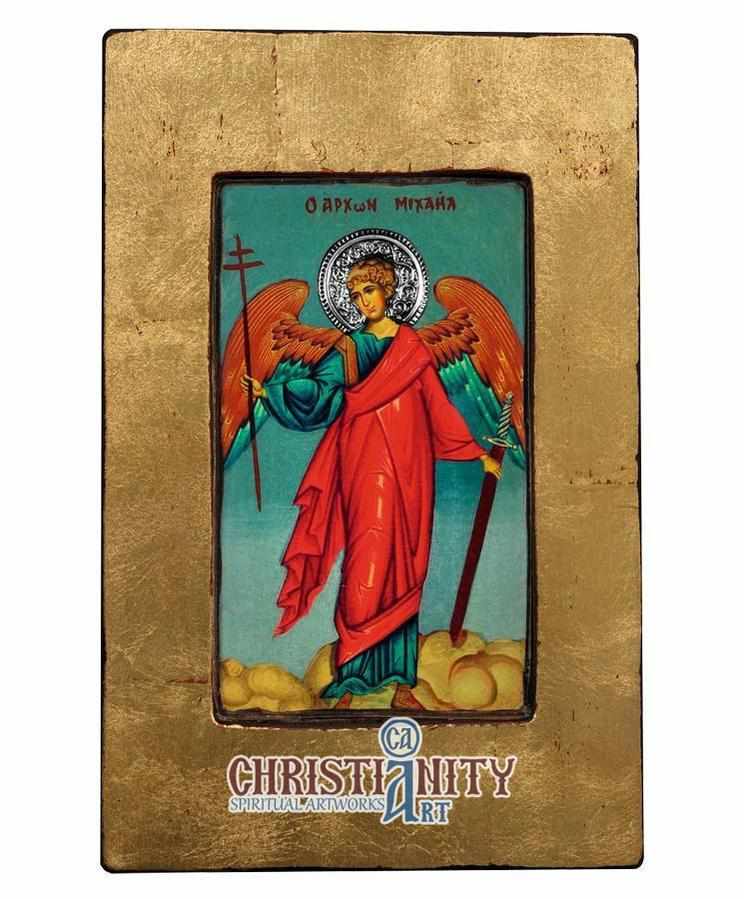
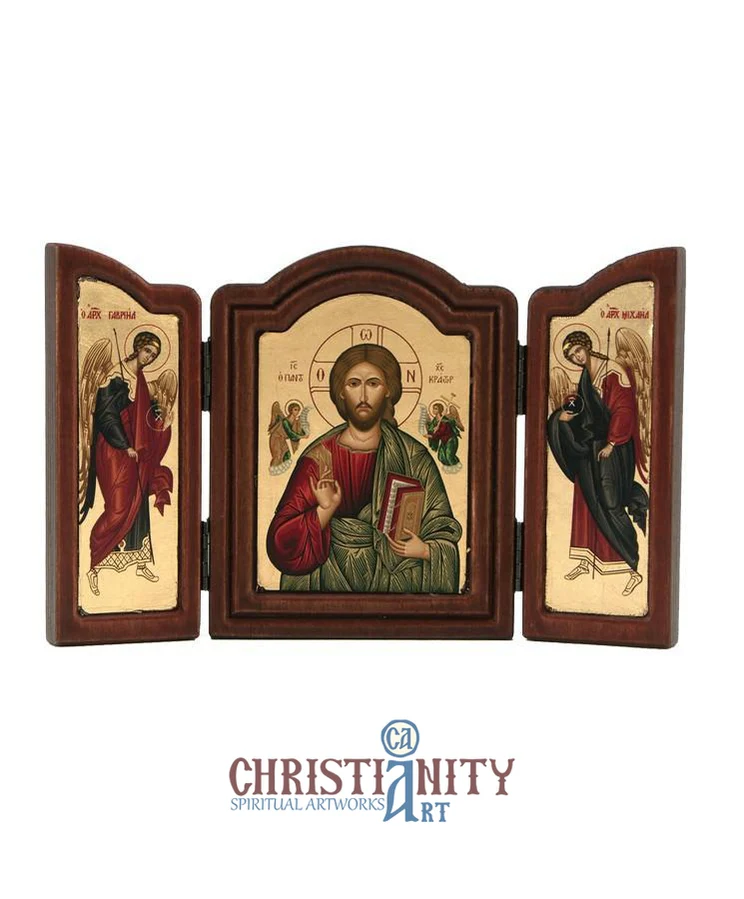
Triptych of seriograph icons crafted in canvas on wood. On the moving leaves of the triptych the Archangel Michael and Archangel Gabriel are depicted at the right and left side, with the same brushwork as the central icon.
Christ Pantocrator
It is an icon of the 16th century. As indicated by the Christian hagiography, Christ Pantocrator overtops the central dome of all the Byzantine churches; if however the church does not have a dome then the figure of Christ is hagiographed at the center of the temple’s ceiling. In this version of the icon, Jesus Christ is depicted with a strict look but expressing the love that characterizes him, with a golden halo, blessing with his right hand and holding the Gospel close to his chest with his left hand. The original icon, which is the source of inspiration for the hagiographer, is in Sifnos, on the holy rock of Chrysopigi, at the famous monastery of Panagia Chrysopigi, built in 1650.
Original: $89.90
-65%$89.90
$31.46Product Information
Product Information
Shipping & Returns
Shipping & Returns
Description
Triptych of seriograph icons crafted in canvas on wood. On the moving leaves of the triptych the Archangel Michael and Archangel Gabriel are depicted at the right and left side, with the same brushwork as the central icon.
Christ Pantocrator
It is an icon of the 16th century. As indicated by the Christian hagiography, Christ Pantocrator overtops the central dome of all the Byzantine churches; if however the church does not have a dome then the figure of Christ is hagiographed at the center of the temple’s ceiling. In this version of the icon, Jesus Christ is depicted with a strict look but expressing the love that characterizes him, with a golden halo, blessing with his right hand and holding the Gospel close to his chest with his left hand. The original icon, which is the source of inspiration for the hagiographer, is in Sifnos, on the holy rock of Chrysopigi, at the famous monastery of Panagia Chrysopigi, built in 1650.