Jesus Christ Pantocrator - Aged wooden triptych icon in canvas with gold background - Mount Athos
Jesus Christ Pantocrator - Aged wooden triptych icon in canvas with gold background - Mount Athos
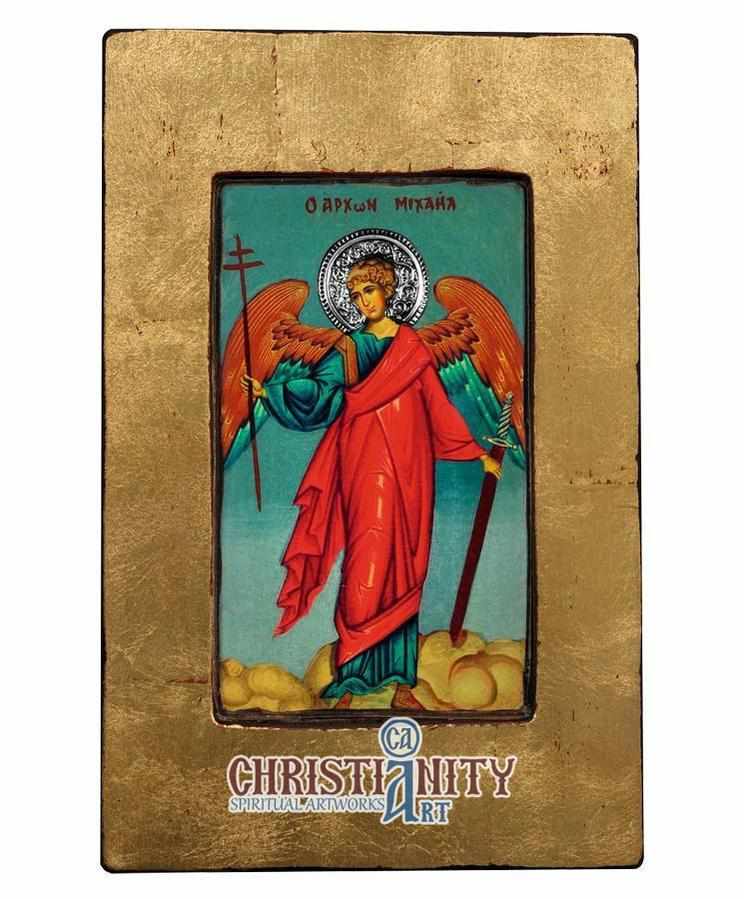
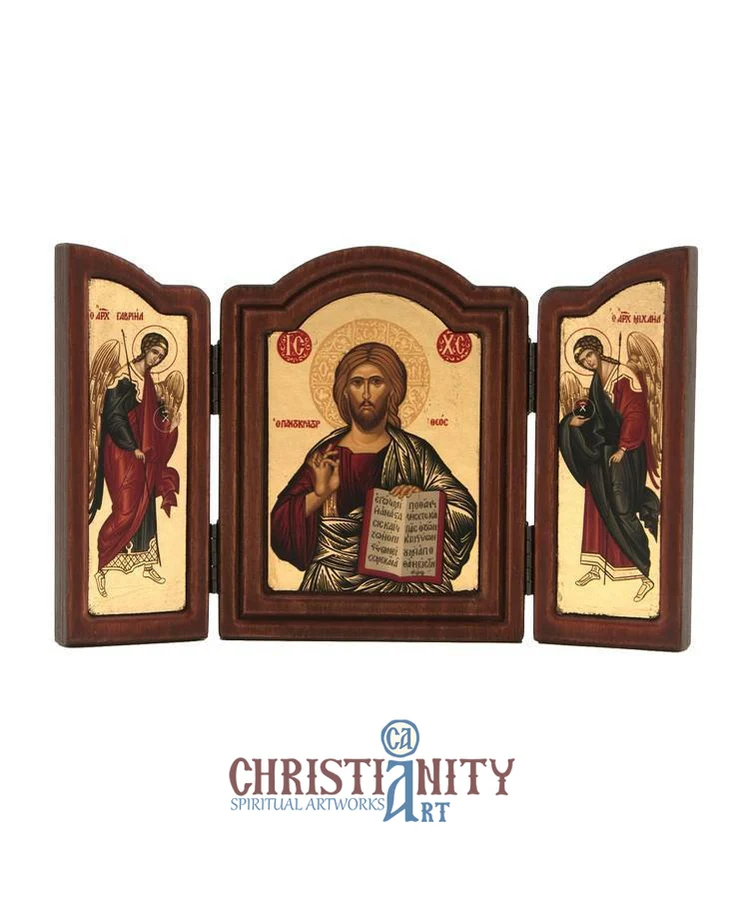
Triptych of seriograph icons crafted in canvas on wood. On the moving leaves of the triptych the Archangel Michael and Archangel Gabriel are depicted at the right and left side, with the same brushwork as the central icon.
Christ Pantocrator
The icon of Christ as Pantocrator is one of the first depictions of Jesus Christ that was developed by the early Christian Church and remained as the central icon of the Eastern Orthodox Church. There is no crown or scepter in this depiction of Christ holding the Gospel on his chest with his left hand and blessing and teaching with his right hand,. The large, open eyes of Jesus Christ look into the soul of the spectator; the long, curved forehead is a sign of wisdom; the long, straight nose proves his kind soul and his small closed mouth indicates the silence of the meditative. The icon of the 16th century, an inspiration to the hagiographer, is the work of hagiographer Michael or Michelis Damaskinos of the Cretan School. The original work is located in the Byzantine and Christian Museum of Athens.
Original: $89.90
-65%$89.90
$31.46Product Information
Product Information
Shipping & Returns
Shipping & Returns
Description
Triptych of seriograph icons crafted in canvas on wood. On the moving leaves of the triptych the Archangel Michael and Archangel Gabriel are depicted at the right and left side, with the same brushwork as the central icon.
Christ Pantocrator
The icon of Christ as Pantocrator is one of the first depictions of Jesus Christ that was developed by the early Christian Church and remained as the central icon of the Eastern Orthodox Church. There is no crown or scepter in this depiction of Christ holding the Gospel on his chest with his left hand and blessing and teaching with his right hand,. The large, open eyes of Jesus Christ look into the soul of the spectator; the long, curved forehead is a sign of wisdom; the long, straight nose proves his kind soul and his small closed mouth indicates the silence of the meditative. The icon of the 16th century, an inspiration to the hagiographer, is the work of hagiographer Michael or Michelis Damaskinos of the Cretan School. The original work is located in the Byzantine and Christian Museum of Athens.